Showing posts sorted by date for query bitcoin price. Sort by relevance Show all posts

Wednesday, 4 June 2025

5 Costly Crypto Investing Mistakes to Avoid in Choppy Markets

Crypto markets can be a wild ride, with exhilarating highs often followed by gut-wrenching lows. Many investors see massive gains during bullish trends only to watch them evaporate in sideways or bearish phases. The key to preserving your portfolio lies in avoiding common pitfalls that trap even seasoned traders. This article dives into five critical mistakes crypto investors make in choppy markets and offers actionable strategies to steer clear of them. Whether you're a beginner or a veteran, these insights will help you navigate the volatile crypto landscape with discipline and confidence.

The Perils of Slow Decision-Making

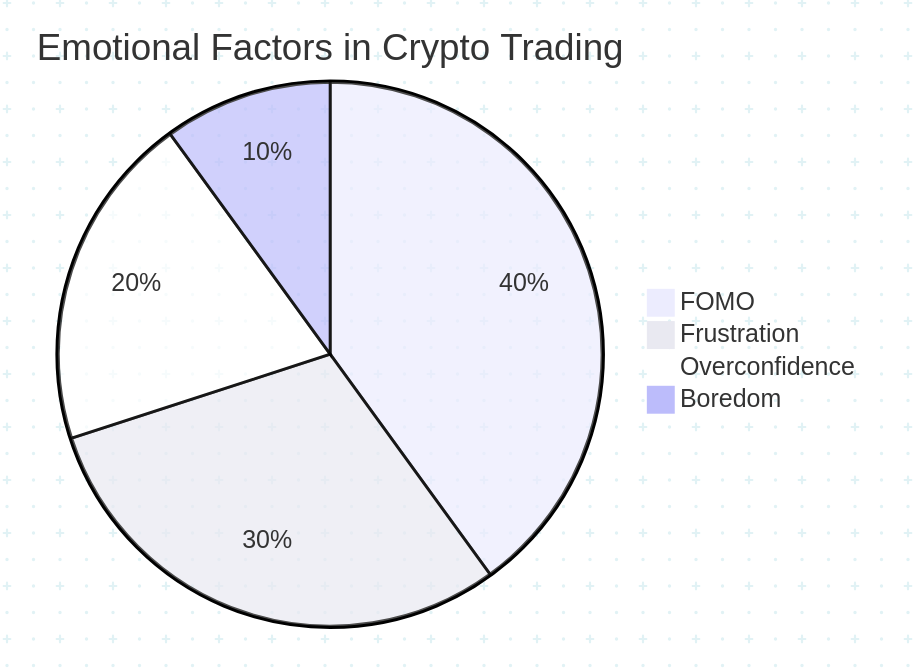
In crypto, hesitation can be costly. Opportunities often arise from compelling setups — whether it's a promising chart pattern, a groundbreaking technological innovation, or strong on-chain signals like whale wallet activity. However, in dull or sideways markets, investors often become lethargic, missing the window to act. By the time social media buzz ignites and FOMO (fear of missing out) takes over, they jump in late, buying at the peak.

How to Avoid It:

  • Act Swiftly on Signals: Develop a system to identify opportunities early, using tools like technical analysis or on-chain data platforms (e.g., Glassnode or Nansen).
  • Resist FOMO: If a token is already trending heavily on platforms like X, it's often too late to enter. Accept that you've missed the train and wait for the next setup.
  • Fun Fact: According to a 2023 Chainalysis report, 60% of crypto trading volume occurs during periods of high market sentiment, often driven by FOMO, leading to overbought conditions.

Confusing Strength with a Trend Reversal

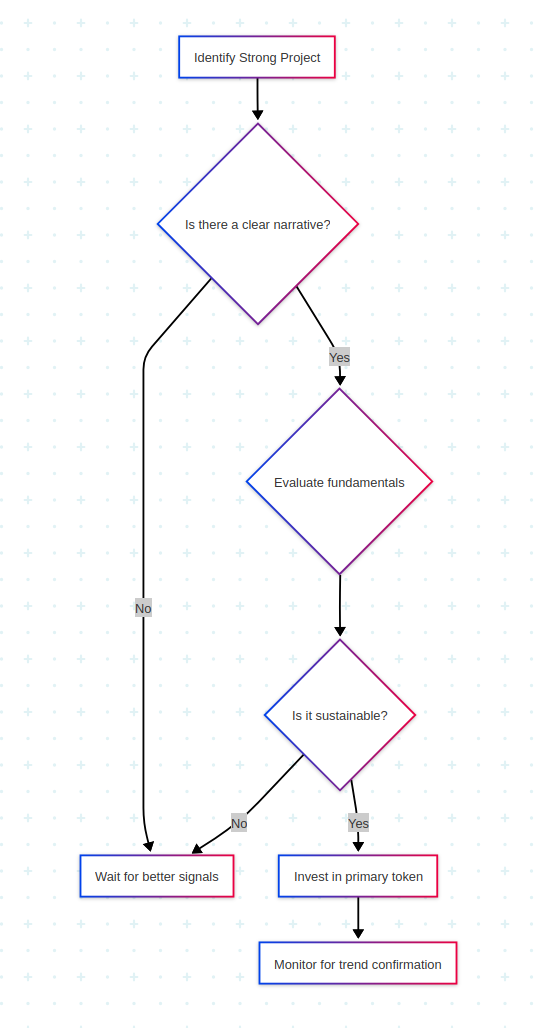
Three consecutive green candles on a chart can spark euphoria, but don't mistake short-term strength for a long-term trend reversal. A project may outperform a weak market due to a strong narrative or innovation, but without a robust thesis, it's unlikely to sustain a broader trend shift. For example, projects like Hyperliquid have shown exceptional strength due to unique narratives, but most tokens don't have that staying power.

How to Avoid It:

  • Build a Thesis: Before investing, ask why a project is gaining traction. Is it a fleeting pump or a fundamental shift? Research its technology, team, and market fit.
  • Focus on Established Tokens: In ecosystems like Virtuals, which recently pivoted to add utility to its token, stick to the primary token rather than chasing riskier, low-cap alternatives.
  • Curious Data Point: A 2024 Dune Analytics study found that 70% of low-cap tokens in emerging ecosystems lose 80% of their value within three months of a pump.
Emotional Frustration and the Vicious Cycle

Sideways or bearish markets breed frustration. Missed opportunities and lower returns can erode confidence, leading to a vicious cycle: you doubt your skills, enter trades late, lose money, and spiral further into self-doubt. This emotional rollercoaster clouds judgment and amplifies losses.

How to Avoid It:

  • Accept Lower Returns: Understand that choppy markets naturally yield lower profits. Focus on capital preservation over chasing unrealistic gains.
  • Adopt a Rational Strategy: Create a rule-based system for entries and exits, using predefined price levels, timeframes, or on-chain metrics (e.g., whale wallet sell-offs tracked via Etherscan).
  • Balance Intuition and Logic: Intuition plays a role in crypto, but anchor it with data-driven signals to avoid emotional trades.
Trading Out of Boredom

Boredom is a silent portfolio killer. In quiet markets, the lack of action tempts investors to make impulsive trades outside their comfort zone, chasing adrenaline rather than sound opportunities. These "boredom trades" often involve oversized positions in high-risk assets, leading to significant losses.

How to Avoid It:

  • Stick to Your Strategy: Only trade when your predefined signals align, regardless of how long it's been since your last move.
  • Manage Position Sizes: Avoid oversized bets on speculative trades, especially in unvetted projects.
  • Interesting Stat: A 2022 Coinbase study revealed that 25% of retail traders admitted to making impulsive trades during low-volatility periods, with 80% of those trades resulting in losses.

Ignoring Liquidity

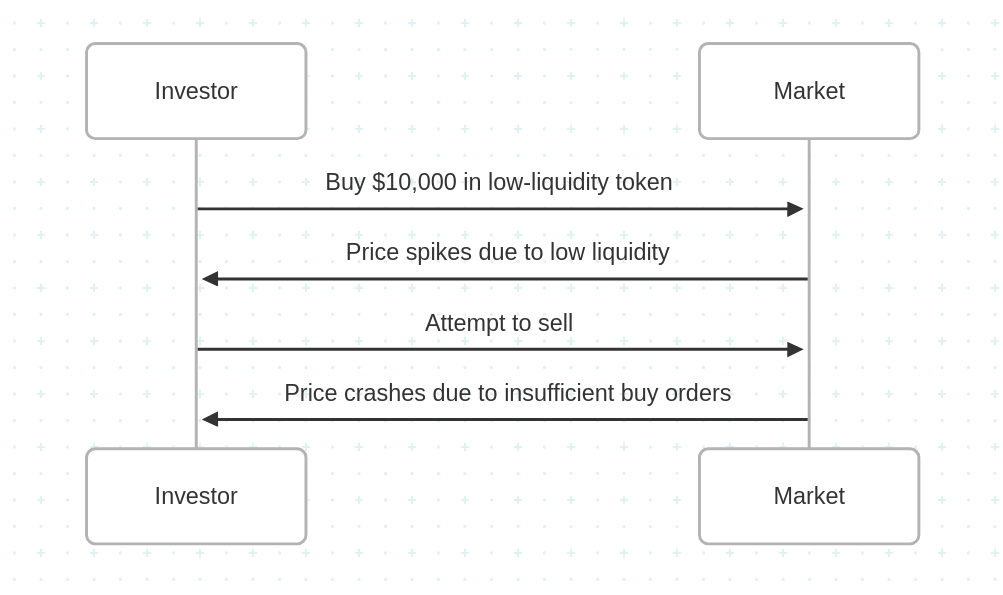
Liquidity is the lifeblood of crypto markets, yet many investors overlook it. A project's market cap doesn't tell the whole story. For example, investing $10,000 in a project with $2 million market cap but only $100,000 in liquidity can lead to extreme volatility. Low liquidity amplifies price swings — up during buys, down during sells — potentially wiping out your capital in minutes.

How to Avoid It:

  • Check Liquidity Metrics: Use platforms like CoinMarketCap or DexTools to assess a token's trading volume and liquidity pool depth.
  • Secure Early Profits: In low-liquidity projects, take initial profits quickly to minimize exposure to sharp drops.
  • Quick Tip: Projects with liquidity below $500,000 often experience 50–90% price swings during sell-offs, per 2024 DeFiLlama data.
The Discipline Advantage: A Bonus Insight

In choppy or bearish markets, building large positions without a disciplined strategy is a recipe for disaster. The most successful investors in these phases aren't the smartest — they're the most disciplined. They stick to well-defined entry and exit plans, monitor market conditions closely, and avoid the "buy and forget" mentality.

Actionable Steps:

  • Set Clear Rules: Define entry prices, exit targets, and investment timeframes.
  • Stay Active: Choppy markets demand constant attention to avoid being caught off-guard by sudden shifts.
  • Pro Insight: If you're not confident navigating flat markets, sit them out. Waiting for a bullish trend can yield higher returns with lower risk, as bull markets historically amplify gains for patient investors (e.g., Bitcoin's 2020–2021 rally saw 300% returns for holders).

Conclusion: Master Discipline to Protect Your Portfolio

Crypto investing is as much about avoiding mistakes as it is about seizing opportunities. By acting decisively, distinguishing strength from trends, managing emotions, resisting boredom, and prioritizing liquidity, you can safeguard your portfolio in choppy markets. Discipline, not intelligence, is the key to surviving and thriving in these conditions. Reflect on your own trading habits: Are you falling into these traps? Share your experiences or additional mistakes you've encountered in the comments below — let's learn from each other to build stronger portfolios.


source: https://raglup.medium.com/5-costly-crypto-investing-mistakes-to-avoid-in-choppy-markets-f969a5322eea?source=rss-f56f44caad34------2

Friday, 30 May 2025

Why I Lost Over $100,000 in Crypto: The Biggest Mistake to Avoid

The crypto market is a wild ride, full of dizzying highs and gut-wrenching lows. Like many, I've tasted the thrill of massive gains, only to watch them vanish due to a single, critical mistake: prioritizing being right over making money. This mindset cost me over $100,000 in 2022, and it's a trap countless investors fall into. I'll share the lessons I learned the hard way, why this error is so common, and how you can avoid it to become a smarter, more adaptable crypto investor. Buckle up — this is a story of loss, reflection, and redemption, with actionable insights to protect your portfolio.

The Harsh Truth About Crypto Losses

The crypto market doesn't care about your convictions or your carefully crafted investment theses. It's a brutal arena where adaptability trumps stubbornness. Most investors, myself included, have lost significant sums not because of market manipulation or lack of skill, but because we cling to the need to be right. We fall in love with projects, ignoring the market's signals, and end up holding losing positions far longer than we should.

This mindset stems from traditional investing wisdom, where long-term holding often pays off in stable markets like stocks or ETFs. But crypto is different — it's volatile, speculative, and driven by momentum. According to a 2023 study by Chainalysis, over 60% of crypto investors who lost money in bear markets cited "holding too long" as a primary reason. My story is a case study in this mistake, and it starts with two projects I believed in wholeheartedly.

My $100,000 Mistake: A Tale of Two Projects

In 2021, I was riding high on the crypto bull run. Two projects caught my eye: Luxo and Morpheus Network (XMW). Luxo was a blockchain focused on luxury, led by Fabian Westeller, the creator of Ethereum's ERC-20 protocol. Despite its potential, its market cap was under $1 billion, a fraction of competitors like Polkadot or Avalanche, which boasted valuations in the tens of billions. Morpheus Network, on the other hand, targeted logistics, with partnerships like the Argentine government and founders from major corporations. Both projects had stellar teams, ambitious roadmaps, and seemingly limitless potential.

Coming from a stock market and startup background, I was hooked. I analyzed their fundamentals — technology, team, and vision — and fell in love. I invested heavily, convinced these were the next big thing. Fast forward to 2022, the bear market hit, and both projects tanked alongside the broader market. My response? I doubled down, buying the dip at 15%, 25%, even 50% losses. I was certain the fundamentals would prevail. Spoiler: they didn't. By the end of 2022, I had lost nearly all my 2021 gains — over $100,000 — because I refused to adapt.

Why Did This Happen?

My mistake wasn't poor analysis; it was failing to understand crypto's unique dynamics. Unlike traditional markets, crypto is driven by speculation and liquidity, not just fundamentals. Projects with great teams can fail if they lose market attention. My conviction in Luxo and Morpheus Network blinded me to the market's signals, like declining prices and waning interest. I was trying to apply stock market logic — hold for the long term — to a market that rewards trading and momentum.

Fun Fact: A 2024 report by Glassnode found that 70% of altcoins from the 2021 bull run lost over 90% of their value by mid-2022, highlighting the crypto market's volatility and the dangers of blind holding.

The Core Lesson: Adaptability Over Conviction

The crypto market doesn't reward stubbornness; it rewards adaptability. The price is the ultimate truth, and fighting it is a losing battle. Markets are never wrong — only people are. To succeed, you must learn to read the market's signals and pivot when necessary, even if it means admitting you were wrong.

Take Berachain, a project I admire for its technology and community. Despite its strengths, its price action since launch has been lackluster. While Bitcoin, Solana, and even Ethereum gained traction in recent rallies, Berachain stagnated or fell. Holding onto it out of loyalty would have been a mistake. Instead, I exited my position, preserving capital for better opportunities. I still believe in Berachain's long-term potential, but I'm waiting for market signals — like renewed attention or price momentum — before re-entering.

How to Be Adaptable

To avoid my mistake, adopt these strategies:

  • Follow the Price Action: The market's price movements are your best guide. If a project isn't gaining traction, don't fight the trend.
  • Set Clear Entry and Exit Points: Define your investment thesis with specific triggers for buying and selling. For example, exit if a token drops 20% below your entry price or fails to follow a market rally.
  • Document Everything: Keep a trading journal to record why you entered or exited a trade. Review it regularly to refine your strategy.
  • Avoid the Hero Complex: Betting against the market, like Michael Burry in The Big Short, is tempting but risky. Most successful crypto investors, like MicroStrategy's Michael Saylor, buy during uptrends, not against them.
Pro Tip: Michael Saylor's Bitcoin purchases, as tracked by BitInfoCharts, show he bought heavily during bullish trends, capitalizing on momentum rather than fighting downturns.

Avoiding Emotional Traps

The crypto market thrives on emotion — fear of missing out (FOMO) and the urge to "be right" can cloud judgment. My $100,000 loss was fueled by emotional attachment to Luxo and Morpheus Network. I ignored red flags because I wanted my analysis to be correct. This is a common trap, especially for those transitioning from traditional markets.

To combat this:

  • Don't Fall in Love with Projects: Treat investments as trades, not marriages. If a project underperforms, cut losses and move on.
  • Embrace Being Wrong: Admitting a mistake isn't failure — it's growth. Exiting a losing trade frees up capital for better opportunities.
  • Avoid Buying the Dip Blindly: Only buy dips if confirmed by positive price action or market trends. As the saying goes, "Don't catch a falling knife."

Building a Winning System

The key to long-term success in crypto is a disciplined system. Here's how to build one:

  1. Define Your Thesis: Outline why you're investing in a project, including price targets and risk levels.
  2. Track Your Trades: Use a journal to log every trade, including reasons for entry and exit. Tools like Notion or Excel work well.
  3. Review and Refine: Analyze your wins and losses to identify patterns. What worked? What didn't?
  4. Stay Liquid: Keep cash reserves to seize new opportunities, like emerging narratives (e.g., DeFi, AI, or memecoins).

By documenting and reviewing your trades, you'll spot mistakes and replicate successes. Over time, this system will make you a better investor.

Did You Know?: A 2022 study by the University of Cambridge found that traders who kept detailed journals improved their returns by an average of 15% compared to those who didn't.

Sources:


source: https://raglup.medium.com/why-i-lost-over-100-000-in-crypto-the-biggest-mistake-to-avoid-6980110f62e3?source=rss-f56f44caad34------2

Tuesday, 15 April 2025

The MANTRA Meltdown: Unraveling a $6 to $0.50 Crypto Crash

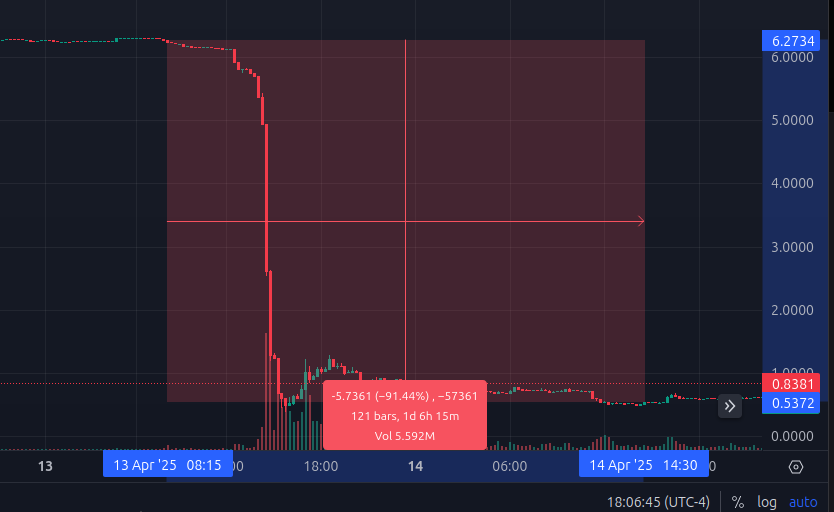
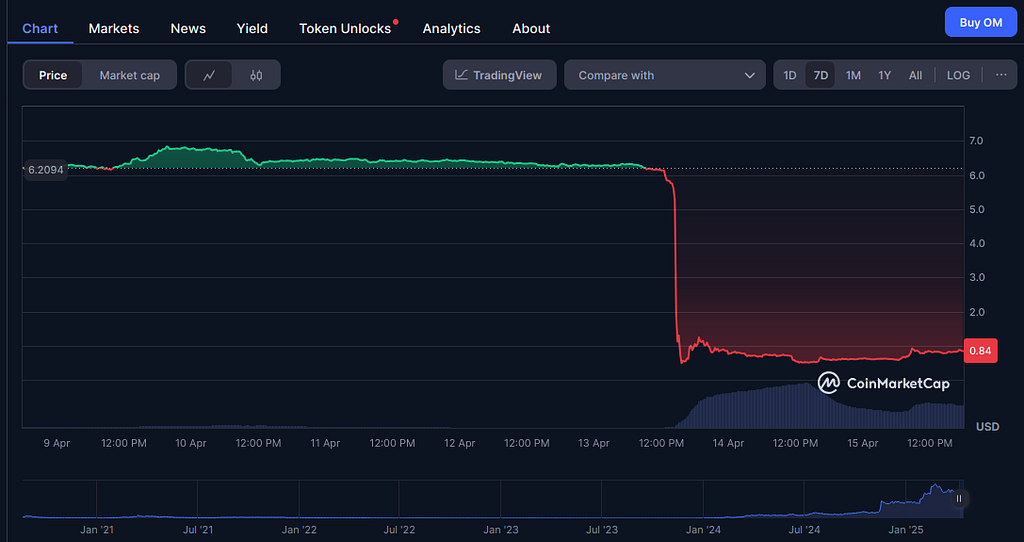
In the volatile world of cryptocurrency, few events have sparked as much controversy and speculation as the dramatic collapse of Mantra's OM token, plummeting from nearly $6 to $0.50 in a single day on April 13, 2025. This catastrophic 90% drop wiped out over $5 billion in market capitalization, leaving investors reeling and the crypto community scrambling for answers. Was it an insider dump, a cascade of reckless liquidations, or something else entirely?, this article dissects the Mantra meltdown, explores competing theories, and reflects on the broader implications for the crypto industry.

A Catastrophic Collapse: The Numbers Tell the Story

On April 13, 2025, Mantra's OM token, which had been trading at a high of nearly $7, experienced a freefall, bottoming out at $0.40 before stabilizing around $0.52. This represented a staggering loss of over 90% of its value in mere hours. For investors, the impact was devastating: a $10,000 investment was reduced to less than $1,000. The speed and scale of the crash raised immediate red flags, prompting intense scrutiny from the crypto community and media outlets alike.

Mantra, a project known for its ambitious plans to tokenize real-world assets (RWA) worth over $1 billion in collaboration with a firm from the United Arab Emirates, had been a darling of the crypto world. Its market cap had propelled it into the top 50 projects, and its community was buzzing with optimism. So, what went wrong?

Theory 1: Insider Dumping and a Potential Rug Pull

The first theory to emerge pointed fingers at insiders. Social media erupted with accusations that team members or early investors orchestrated a massive sell-off, dumping millions of OM tokens onto exchanges like Binance and OKX. This speculation was fueled by data from blockchain analytics platforms Lookonchain and Arkham Intelligence, which identified 17 wallets moving 43.6 million OM tokens — worth approximately $227 million — before the crash. Notably, wallets allegedly linked to Laser Digital, a Nomura-backed investor in Mantra, and Shorooq Partners, another investor, were flagged for transferring significant sums.

The optics were damning: Mantra's social media accounts went silent during the crash, and the token's price tanked in a low-liquidity window on a Sunday afternoon, a time when trading activity is typically minimal. To many, this resembled a classic rug pull — a scenario where insiders cash out, leaving retail investors holding worthless tokens.

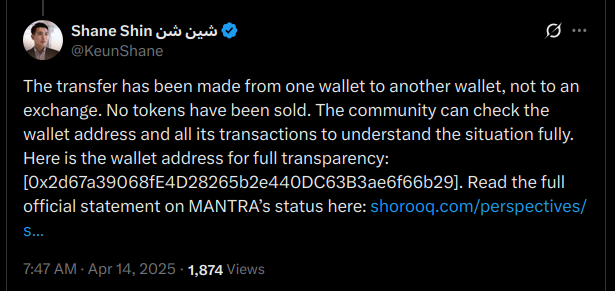
However, Mantra's CEO, John Mullin, swiftly denied these allegations in a Cointelegraph AMA on April 14, 2025. Mullin insisted that neither the Mantra team, its key investors, nor its advisors had sold tokens. He claimed Arkham Intelligence had "mislabeled" the wallets, asserting that the company had provided a transparency report on April 8 detailing its key wallet addresses. Laser Digital and Shorooq Partners echoed Mullin's denials, with Laser stating, "Assertions linking Laser to 'investor selling' are factually incorrect," and Shorooq emphasizing its long-term equity stake in Mantra, not just token holdings.

source: https://x.com/KeunShane/status/1911748174559015050

Theory 2: Cascading Liquidations in a Low-Liquidity Market

The second theory, which gained traction as more details emerged, attributes the crash to a cascade of liquidations triggered by over-leveraged positions in a low-liquidity environment. Mantra's team, in a statement on X, described the event as "reckless liquidations," pointing to exchanges like Binance and OKX. Mullin suggested that a single large sale — possibly not even insider-driven — sparked a domino effect, liquidating leveraged positions and driving prices lower.

Binance's official statement on April 14 supported this narrative, noting that "cross-exchange liquidations" were responsible. The exchange explained that in a low-liquidity window, such as a Sunday afternoon, a single sale can trigger rapid price declines, especially when many traders are using high leverage. For example, a liquidation at $6.50 could push prices to $6.00 in a low-liquidity market, triggering further stop-loss orders and liquidations at $6.10, $6.00, and below.

Adding weight to this theory, Binance revealed it had imposed leverage limits on OM trading since January 2025, suggesting other exchanges may not have been as cautious. OKX, meanwhile, flagged "suspicious activity" across multiple platforms and noted significant changes in Mantra's tokenomics since October 2024, hinting at underlying vulnerabilities.

Curious Fact: The Sunday Effect

The crash's timing on a Sunday afternoon underscores a lesser-known vulnerability in crypto markets. Unlike traditional markets, crypto trades 24/7, but liquidity often dips on weekends, particularly Sundays. A 2023 study by CryptoCompare found that trading volumes on Sundays are, on average, 30% lower than on weekdays, making markets more susceptible to sharp price swings from large orders.

The Regulatory Elephant in the Room

Beyond the immediate causes, the Mantra crash exposes deeper issues in the crypto industry: a lack of standardized regulation and transparency. Unlike traditional markets, where insider trading is heavily monitored and public companies must disclose financial details, crypto projects operate with minimal oversight. Tokenomics, insider allocations, and wallet activities are often opaque, leaving investors vulnerable to manipulation or misinformation.

Noting that while Mantra's high-profile partnerships and top-50 status inspired confidence, the lack of uniform reporting standards made it difficult to assess risks. For instance, the absence of mandatory disclosures about insider token holdings or vesting schedules meant investors had little insight into potential sell-off risks. This opacity contrasts sharply with regulated markets, where such information is public, and insider sales are tracked.

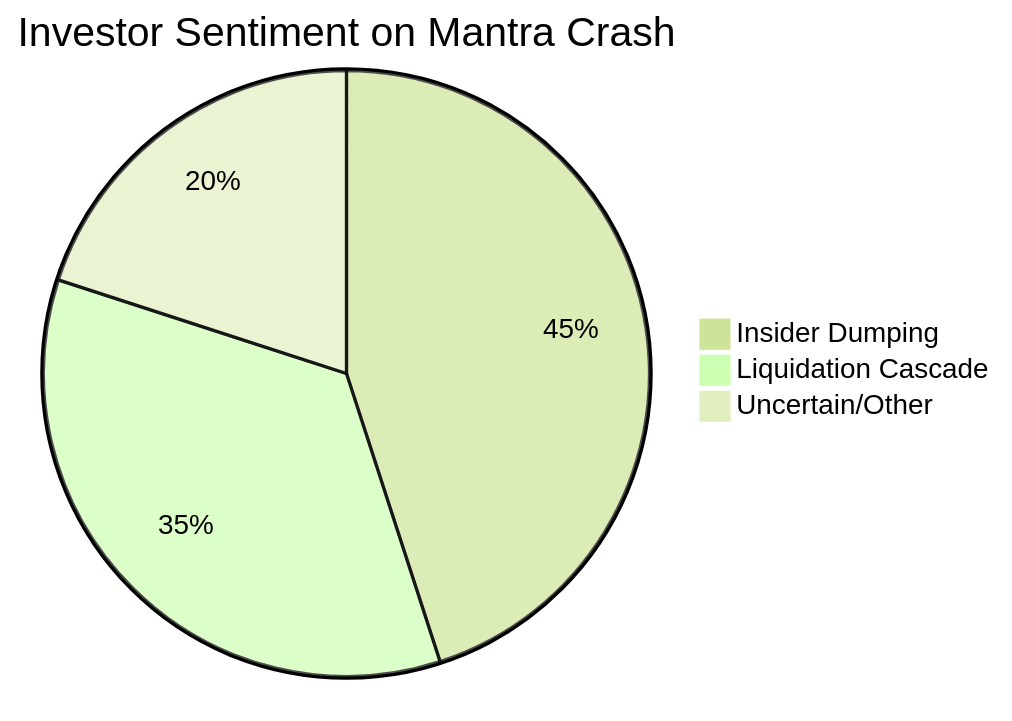
Pie Chart: Investor Sentiment Post-Crash

To capture the community's divided opinions, a pie chart illustrates sentiment based on social media reactions:

Lessons for the Crypto Industry

The Mantra meltdown serves as a wake-up call for the crypto industry. While decentralization is a core tenet, the absence of regulatory frameworks leaves investors exposed to risks that traditional markets have mitigated through decades of oversight. This "uncomfortable conversation" about regulation is inevitable, particularly for projects beyond Bitcoin, which lack a centralized team. Ethereum and other altcoins, with their development teams and token allocations, face similar scrutiny.

Mantra's case also underscores the dangers of over-leveraged trading. High leverage amplifies gains but also magnifies losses, and in low-liquidity scenarios, it can trigger catastrophic cascades. Investors must approach such markets with caution, prioritizing risk management over speculative bets.

Conclusion: A Call for Transparency and Reflection

The Mantra crash of April 13, 2025, remains an unresolved mystery, with investigations ongoing as of April 14. Was it an insider dump, as early data suggested, or a liquidation cascade amplified by low liquidity and reckless leverage? Perhaps the truth lies in a combination of factors. Regardless, the incident highlights the crypto industry's growing pains, from inadequate transparency to the perils of unregulated markets.

As the crypto space matures, stakeholders — projects, exchanges, and investors — must advocate for clearer standards and better risk management. For readers, the question remains: What do you think caused Mantra's collapse? Was it a calculated insider move, a market misstep, or something else? Share your thoughts in the comments below, and let's keep this critical conversation alive.

Sources:


source: https://raglup.medium.com/the-mantra-meltdown-unraveling-a-6-to-0-50-crypto-crash-af56cf47b76d?source=rss-f56f44caad34------2

Friday, 11 April 2025

5514 Interesting News